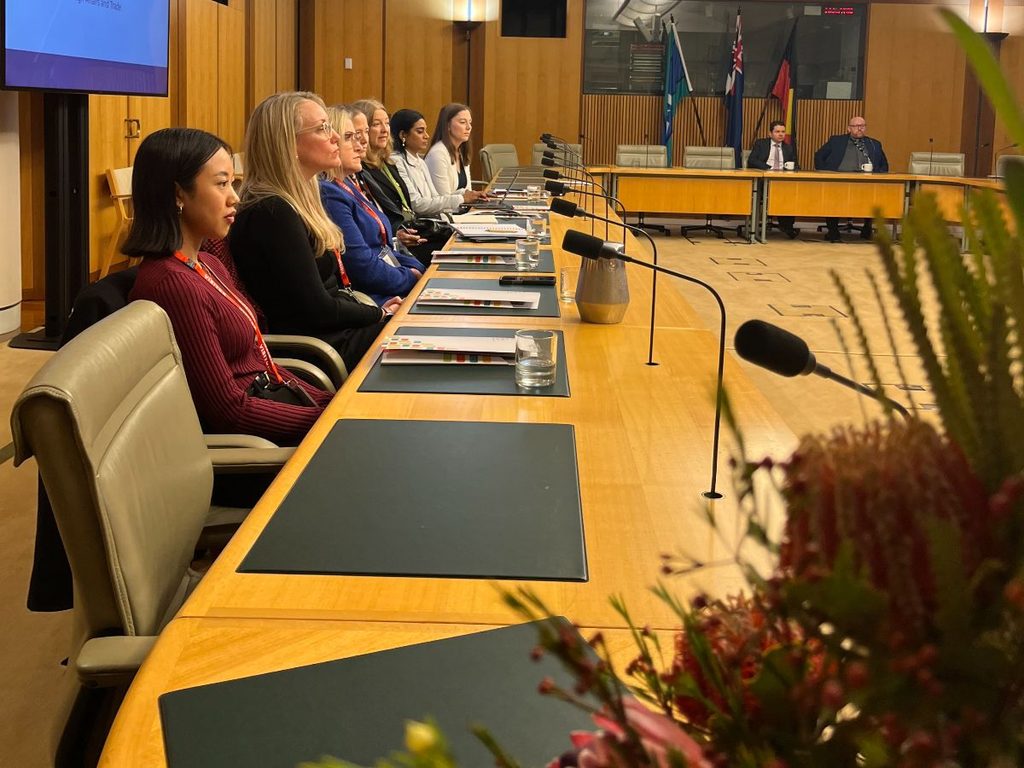
On Tuesday, July 29th, the Australian Parliamentary Group on Population and Development (APGPD) conducted their inaugural meeting for the 48th parliament. We were honoured to introduce our new Co-Chair, Dr. Carina Garland, Federal Member for Chisholm, and extend our gratitude to Senator Mehreen Faruqi for continuing as Co-Chair. We also express our deepest appreciation to our outgoing Co-Chair, Lisa Chesters, for her dedication and advocacy, and for steering the group with determination and courage. We know her ongoing participation in the group will be highly valuable and impactful.
Members were encouraged to,
- Join or renew their APGPD membership
- Visit a local reproductive health clinic, GP, or women’s health service in their electorate
- Participate in an international parliamentary delegation or visit an Australian Government funded clinic or program overseas
- Invite the International Sexual and Reproductive Health and Rights (SRHR) Consortium to brief their teams or other stakeholders
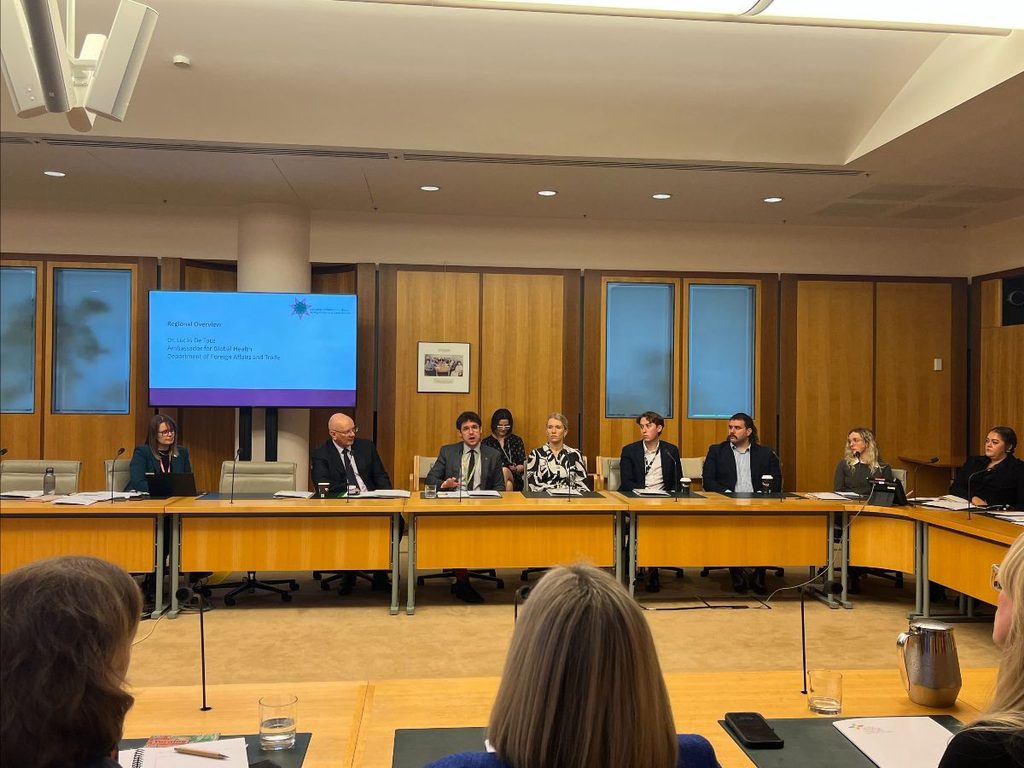
Dr Lucas de Toca, Ambassador for Global Health and First Assistant Secretary, Global Health Division, brought a powerful voice to the event as a long-term advocate for Sexual and Reproductive Health and Rights. Drawing on his global experience, he spoke to the urgent need for coordinated parliamentary action to protect these rights, particularly for women and girls. Australia’s development approach is grounded in four key priorities: First Nations partnerships, gender equality, disability inclusion, and climate action. These aren’t add-ons, they are embedded in every investment we make.
This inclusive approach is especially evident in our work on sexual and reproductive health and rights (SRHR). As the largest SRHR funder in the Pacific and a key partner in Southeast Asia, Australia collaborates with the United Nations Population Fund (UNFPA), International Planned Parenthood Federation (IPPF), and local organisations to deliver comprehensive services. Our flagship regional program, the Transformative Agenda for Women, Adolescents and Youth in the Pacific, which began with $30 million across six Pacific countries and now spans nine countries with a total value of $72.5 million from 2018 to 2027, continues to grow as partner governments invest in its flexible, modular design.
We’re also proud to be the one of the top global donors to UNFPA’s humanitarian work, supporting women and girls in crisis—from refugee camps in Pakistan to conflict affected communities in Syria and cyclone affected populations in Vanuatu. The Pacific faces some of the world’s toughest SRHR challenges, shaped by both traditional health burdens and conservative social norms. Yet the region continues to innovate, such as adapting comprehensive sexuality education into culturally grounded Family Life Education.
Urgency is rising. Fiji’s HIV epidemic has surged, with over 1,600 cases last year alone. Australia is working closely with the Fijian government to develop tailored, responsive interventions that can help prevent wider regional spread.
Despite setbacks from anti-rights movements, there’s real progress: in Southeast Asia skilled birth attendance is up, contraceptive use has more than doubled since 2010, and maternal mortality has dropped. Australia is sharing its expertise—like our world-first cervical cancer elimination program—to help others replicate success.
Looking ahead, engaging more deeply with parliamentarian champions and women MPs in the Pacific and Southeast Asia will be crucial. Their leadership and regional insight are essential to advancing SRHR. Strengthening these connections—through dialogue, collaboration, and shared advocacy—will help build resilient, inclusive systems that reflect the needs and values of local communities. The commitment is strong, but the challenges are growing. Advancing SRHR will require coordinated, whole-of-society action.
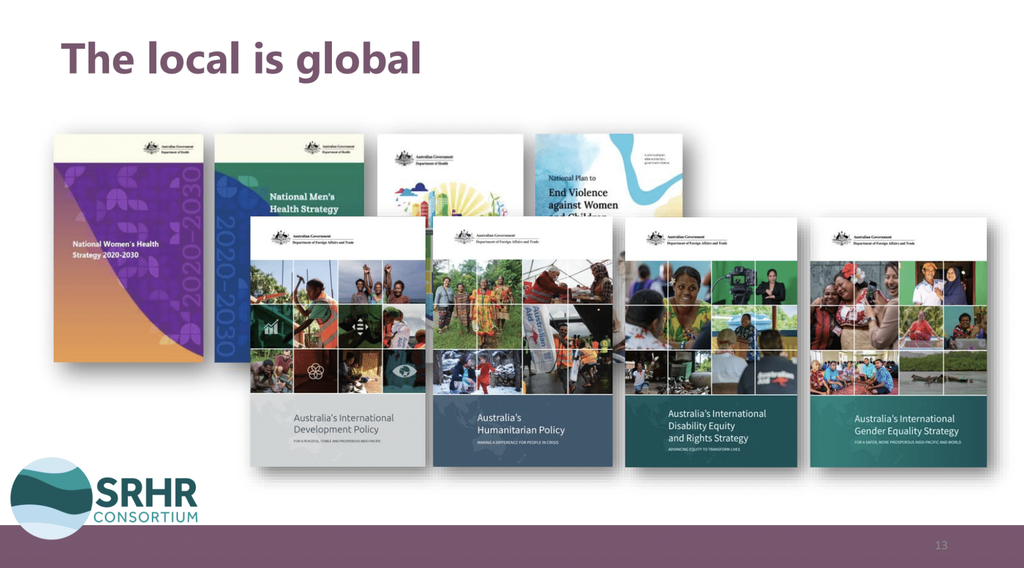
Ms Bonney Corbin, Co-Chair of the International SRHR Consortium, delivered an insightful introduction to sexual and reproductive health and rights. Bonney works at MSI Reproductive Choices and is advocacy co-chair for the Asia Pacific Alliance for SRHR and the Chair of the Australian Women’s Health Alliance.
In 1994, global leaders gathered at the International Conference for Population and Development (ICPD) in Cairo to affirm reproductive autonomy as a fundamental human right. A year later, the Beijing Platform for Action declared women’s right to control their sexuality, free from coercion and violence. These landmark agreements reshaped global policy, placing sexual and reproductive health and rights (SRHR) at the heart of gender equality.
Yet today, these hard-won commitments are under threat.
The Geneva Consensus Declaration, launched in 2020 by 34 conservative government representatives, promotes a narrow definition of family and rejects abortion as a right—undermining decades of progress. Anti-rights movements are gaining traction globally and are challenging evidence-based, rights-focused healthcare. In the Asia-Pacific region, millions still lack access to contraception, and reproductive violence is rising amid humanitarian crises. The Global Gag Rule has once again been introduced and will disrupt care worldwide.
Australia has long championed SRHR and must continue to lead. SRHR includes contraception, fertility care, safe abortion, pregnancy and postnatal support, culturally safe parenting and comprehensive sexuality education. It is a stabilising force in times of disruption and a cornerstone of public health, gender equity, and regional security.
Australia’s commitment to SRHR strengthens health systems, supports education, reduces violence, and enhances regional stability. Parliamentarians play a critical role in shaping funding, policy, and international engagement.
SRHR must remain a foundation of equality and wellbeing—not a battleground for power.