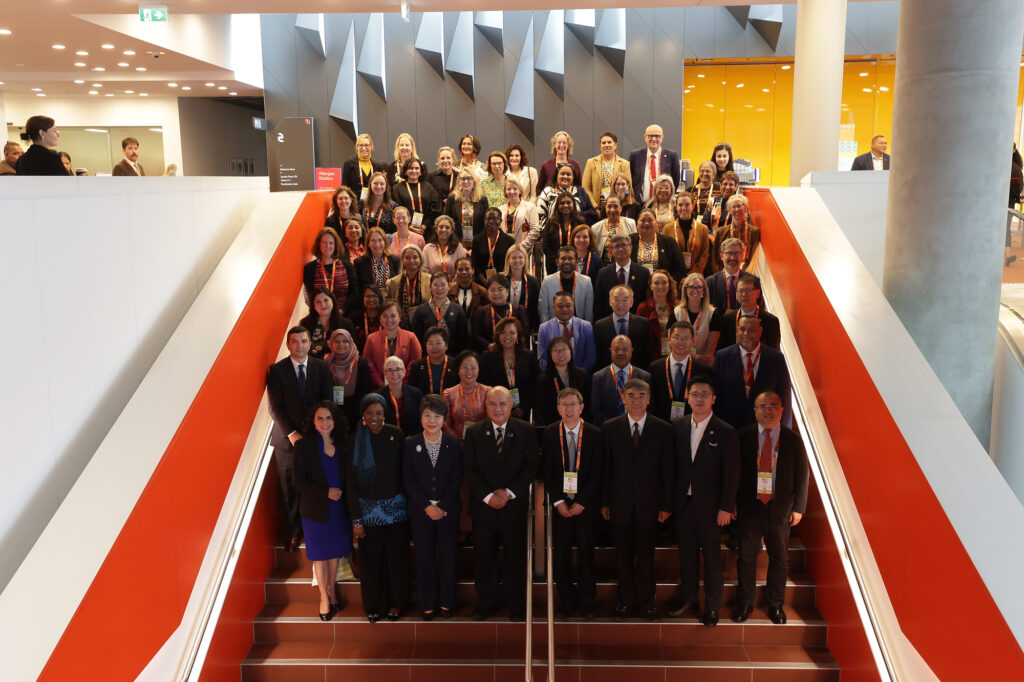
| On 27 April 2026 the Australian Parliamentary Friends of Population and Development proudly co-hosted the High-Level Ministerial and Parliamentary Forum on Sexual and Reproductive Health and Rights (SRHR): Driving Equality, Ensuring Justice as part of Women Deliver 2026 in Melbourne. As the first Women Deliver conference ever held in the Oceania the event marked a significant moment for Australia and the wider Pacific region, bringing global attention to the leadership and perspectives of our region on gender equality and SRHR. Co-hosted with the Asian Forum of Parliamentarians on Population and Development (AFPPD) and supported by UNFPA and the Japan Trust Fund, the forum convened heads of government, ministers, parliamentarians, international organisations, and civil society representatives from across the globe. The forum highlighted the critical role of parliamentary leadership in advancing gender equality and sexual and reproductive health and rights through evidence-based legislation, policy reform, and sustained investment. |
Click here to read the full forum report.
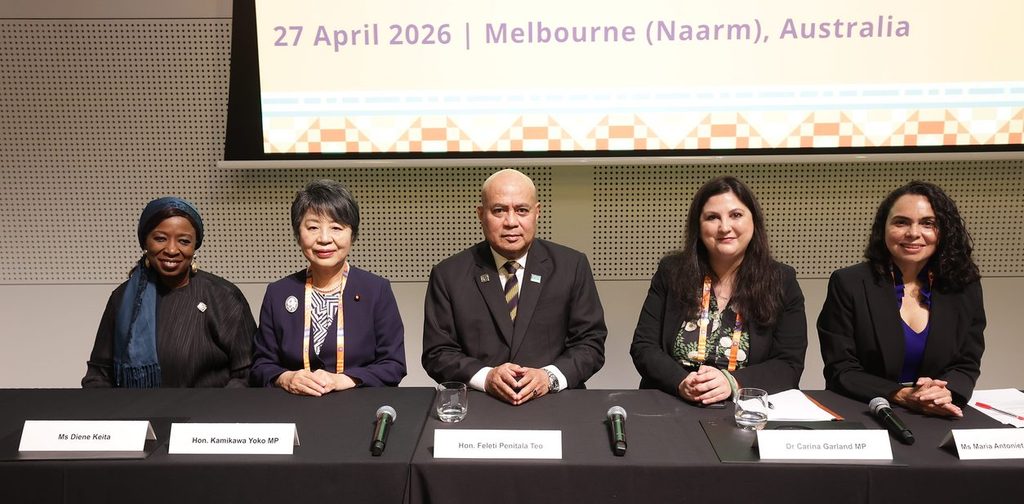
| The opening session set a strong tone for the discussions ahead, featuring contributions from Our Co-Chair Dr Carina Garland MP, AFPPD Chair Hon. Kamikawa Yoko MP, UNFPA Executive Director Dr Diene Keita, and IPPF Director General Maria Antonieta Alcalde Castro. Speakers emphasised the importance of protecting hard-won gains on gender equality, strengthening international cooperation and translating global commitments into practical action. A particular highlight was the keynote address from His Excellency Feleti Teo, Prime Minister of Tuvalu, who brought an important Pacific perspective to the Forum. Prime Minister Teo spoke about the interconnected challenges of climate change, health and gender equality. He highlighted how climate change is affecting sexual and reproductive health and rights (SRHR) in Tuvalu, disrupting access to healthcare, increasing risks for pregnant women and newborns, compromising water safety, contributing to health workforce shortages, and slowing progress onmaternal mortality and adolescent birth rates. In response, Tuvalu is working with partners to strengthen resilience by expanding midwifery training through Fiji National University, building frontline capacity to respond to obstetric emergencies and gender-based violence, and integrating SRHR into disaster preparedness planning. |
SESSION ONE – SRHR as the Foundation of Gender Equality: The Role of Parliamentarians
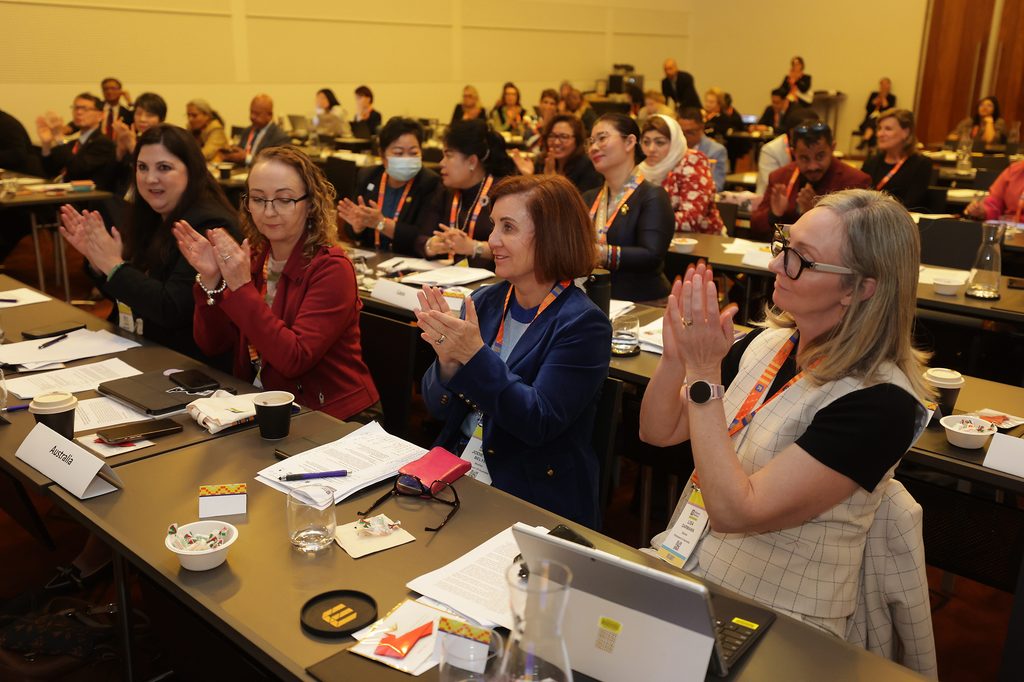
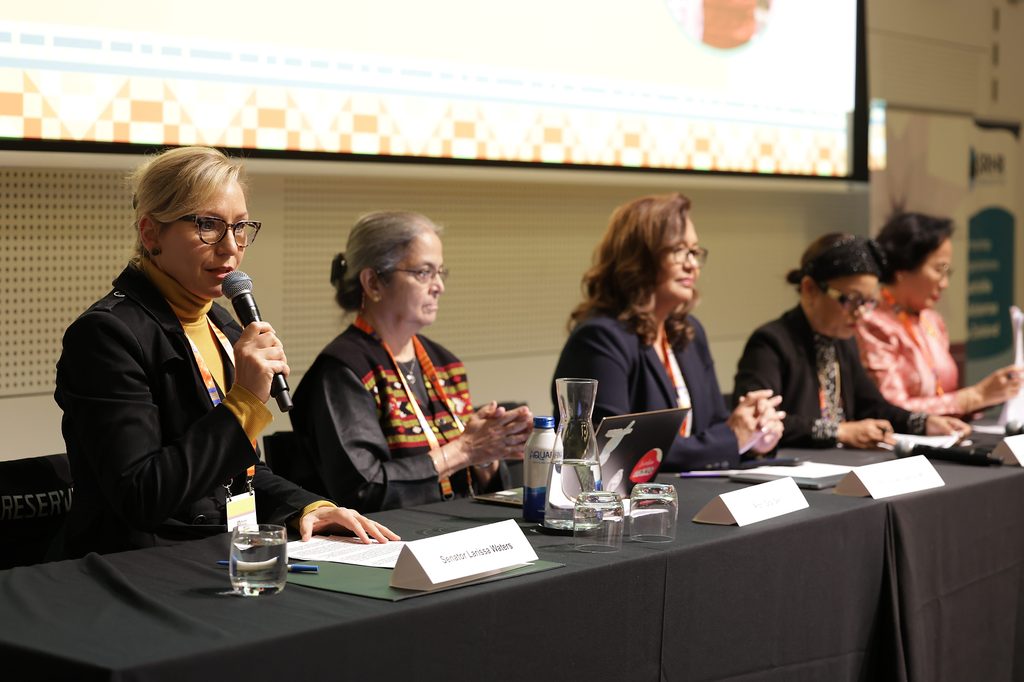
Chaired by Australian Greens Leader Senator Larissa Waters, the first session explored the critical role parliamentarians play in advancing sexual and reproductive health and rights (SRHR) as a foundation for gender equality. Drawing on global, regional and national experiences, panellists discussed growing threats to progress on SRHR, including reduced international funding, misinformation, anti-rights movements and widening inequalities. Professor Gita Sen argued it is harder today being a parliamentarian due to the increased number of influences and actors trying to shape national policies. She urged leaders to monitor the impacts of aid cuts on data systems, the transparency and accountability of bilateral health agreements, the effects of declining ODA on health budgets, and the absence of SRHR and gender equality in emerging global health architecture debates. Hon. Krisel Lagman MP (Philippines) stressed that legislation must be backed by effective implementation, adequate funding and local leadership. Senator Daisy Alik-Momotaro (Marshall Islands) and highlighted barriers to services, in the face of climate change, and geographic isolation and Using Cambodia as an example of progress, Hon. Lork Kheng MP (Cambodia) spoke of the major reductions in maternal mortality and near-universal skilled birth attendance achieved through sustained political commitment, public health investment, midwife training and deployment, delivery incentives, cash transfers for poor families, and health equity funds but further warned that progress depends on stable leadership, adequate financing, and peace. During the discussion, parliamentarians and governments were urged to press—urgently—for gender equality and SRHR to be explicitly embedded within Universal Health Coverage in both the policy discussions and the resulting funding arrangements.
SESSION TWO – The Future We Build: Advancing SRHR Action through Multilateral Parliamentary Leadership
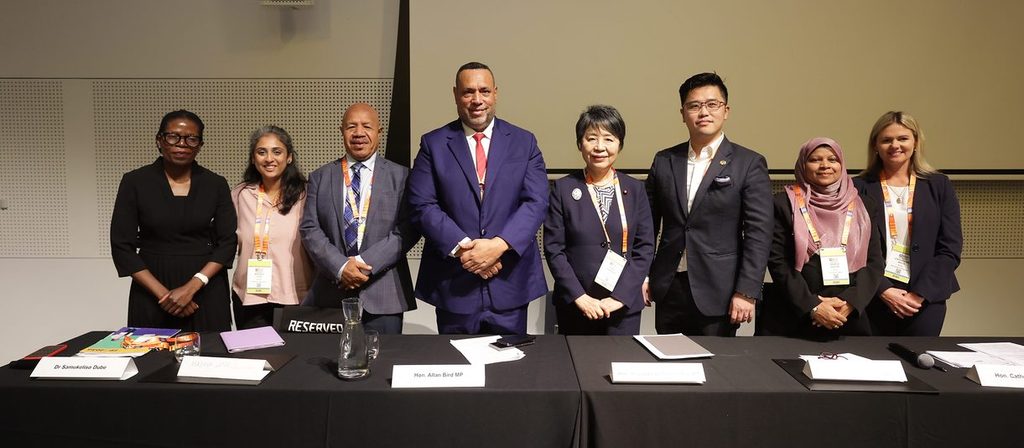
Hon. Allan Bird, Governor of East Sepik Province, Papua New Guinea, described how an all-male parliamentary coalition created PNG’s first, and now permanent, parliamentary committee on gender-based violence, arguing that change must be driven by regional leadership rather than waiting on shifting external priorities. He highlighted national challenges on gender-based violence, teenage pregnancy, HIV and maternal health and urged parliamentarians to use their oversight powers to ensure commitments translate into real progress for women and girls. Hon. Howard Lee Chuan How, MP (Malaysia) and AFPPD Secretary-General, said population policy must build the conditions that allow people to choose family, health, work, and care with dignity, warning that women must never be treated as demographic instruments. He stressed SRHR must be legislated and funded “just in case,” including in disaster planning and humanitarian responses, because emergencies do not pause pregnancy, menstruation, or gender-based violence risks. He also voiced concern that proposals to merge UNFPA and UN Women could dilute mandates and stretch resources, urging vigilance to defend long-standing SRHR frameworks and institutions. Hon. Dr Anara Naeem, MP (Maldives) and AFPPD Executive Committee Member, highlighted the challenges facing small island states and the value of regional parliamentary cooperation in helping to advance SRHR and gender equality. Catherine Wedd, MP (New Zealand) and AFPPD Vice Chair, shared New Zealand’s progress on women’s rights, her own bills on postnatal care and online child protection, while emphasising the importance of regional collaboration and Pacific investment. Ms. Madiha Latif of Pathfinder International called for sustained political commitment, domestic financing and stronger parliamentary leadership to protect and advance and treat SRHR as non-negotiable for economic and social progress
SESSION THREE – Ministerial Dialogue on Advancing SRHR and Gender Equality
In the Ministerial Dialogue session, ministers shared how governments are translating SRHR commitments under the ICPD Programme of Action into policy, investment and measurable outcomes. Discussions highlighted efforts to expand access to contraception and SRHR services, strengthen primary and preventive healthcare, address family, domestic and sexual violence, and remove barriers to care, generating practical lessons for accelerating progress across diverse national contexts.
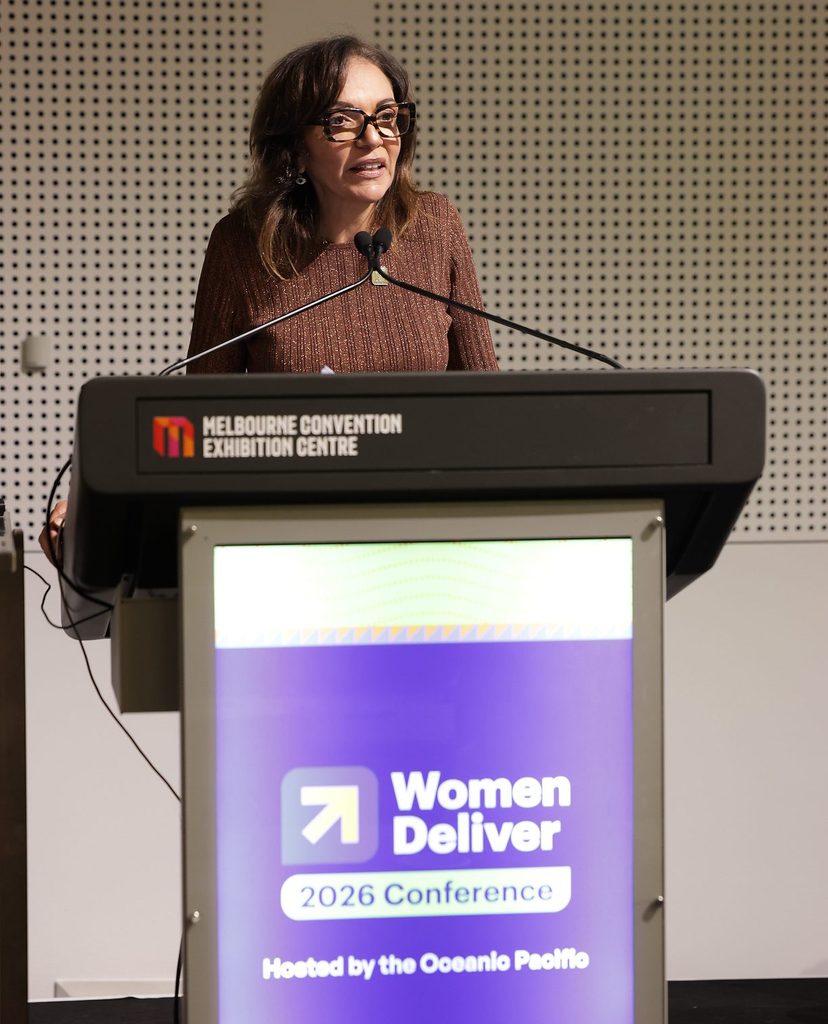
Hon. Dr Anne Aly MP, Australia’s Minister for International Development opened the Ministerial Dialogue, and emphasised that the current global uncertainty makes renewed commitment to gender equality and SRHR more urgent. She announced funding for Australia’s continued regional investment in gender equality and and women’s sexual and reproductive agency and closed by highlighting parliamentarians’ unique role in sustaining focus across election cycles, translating commitments into action, and keeping population and development policies anchored in rights-based approaches. Hon. Fane Fotu Fituafe, Minister for Internal Affairs, Tonga, framed Sexual and Reproductive Health and Rights as practical and everyday realities which help keep girls in school and help mothers access care. She highlighted efforts to strengthen laws, policies and services which including improving access for outer island communities, family life education for young people, and stronger responses to gender-based violence. She also emphasised the importance of inclusive approaches, better data and gender-responsive budgeting to ensure women, girls and people with disabilities are not left behind.
Speaking on behalf of Timor-Leste’s Minister of Health, Dr. Kristy Sword Gusmão reflected on the country’s progress in maternal and child health, family planning and gender equality since independence, while acknowledging ongoing challenges including home births, gender-based violence and adolescent pregnancy. Hon. Charmaine Scotty shared Nauru’s work to strengthen responses to sexual and gender-based violence, build local family planning expertise and develop youth-friendly health services, while Hon. Rebecca White outlined Australia’s investment in women’s health through expanded contraceptive access, workforce development and efforts to eliminate cervical cancer. Hon. Gardena Aisek highlighted the Federated States of Micronesia’s commitment to education as a pathway to SRHR and gender equality, with a focus on comprehensive sexuality education, teacher training and youth empowerment. Across the discussion, speakers emphasised the importance of political leadership, sustained investment, inclusion and cross-sector collaboration to deliver meaningful outcomes for women, girls and young people.
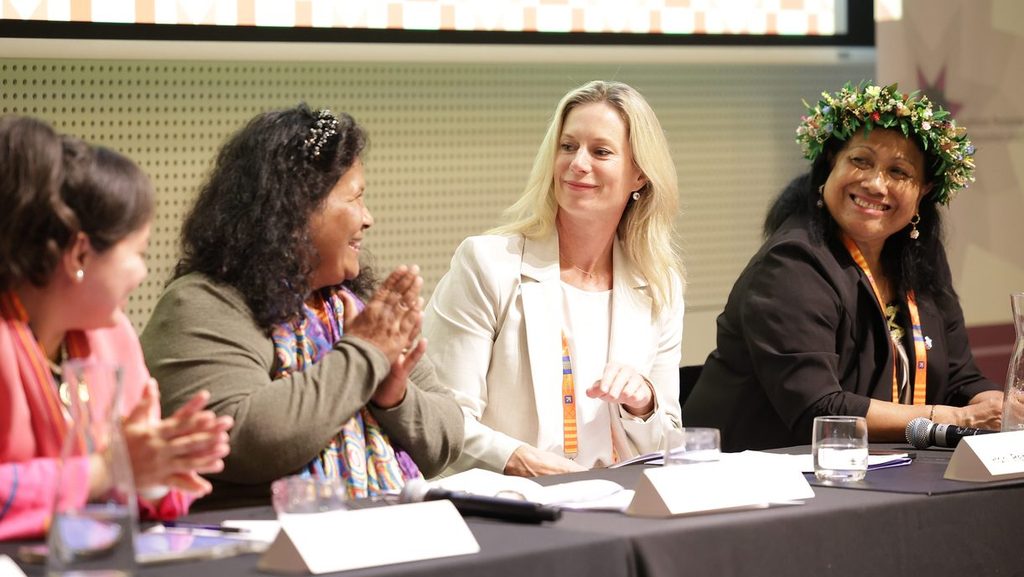
The High-Level Ministerial and Parliamentary Forum reaffirmed that sexual and reproductive health and rights are fundamental to achieving gender equality, development justice and sustainable development. Across sessions, participants emphasised the urgent need to strengthen political leadership, protect hard-won rights, invest in evidence-based policies and financing, and address emerging challenges including climate change, demographic change, digital harms and growing anti-rights movements. The unanimous adoption of the Melbourne Call to Action reflected a shared commitment to translating global commitments into concrete legislative, policy and budgetary action. The forum concluded with a strong sense of solidarity and renewed determination to work collectively to advance the rights, health and wellbeing of women, girls and young people across the Asia-Pacific region and beyond.